
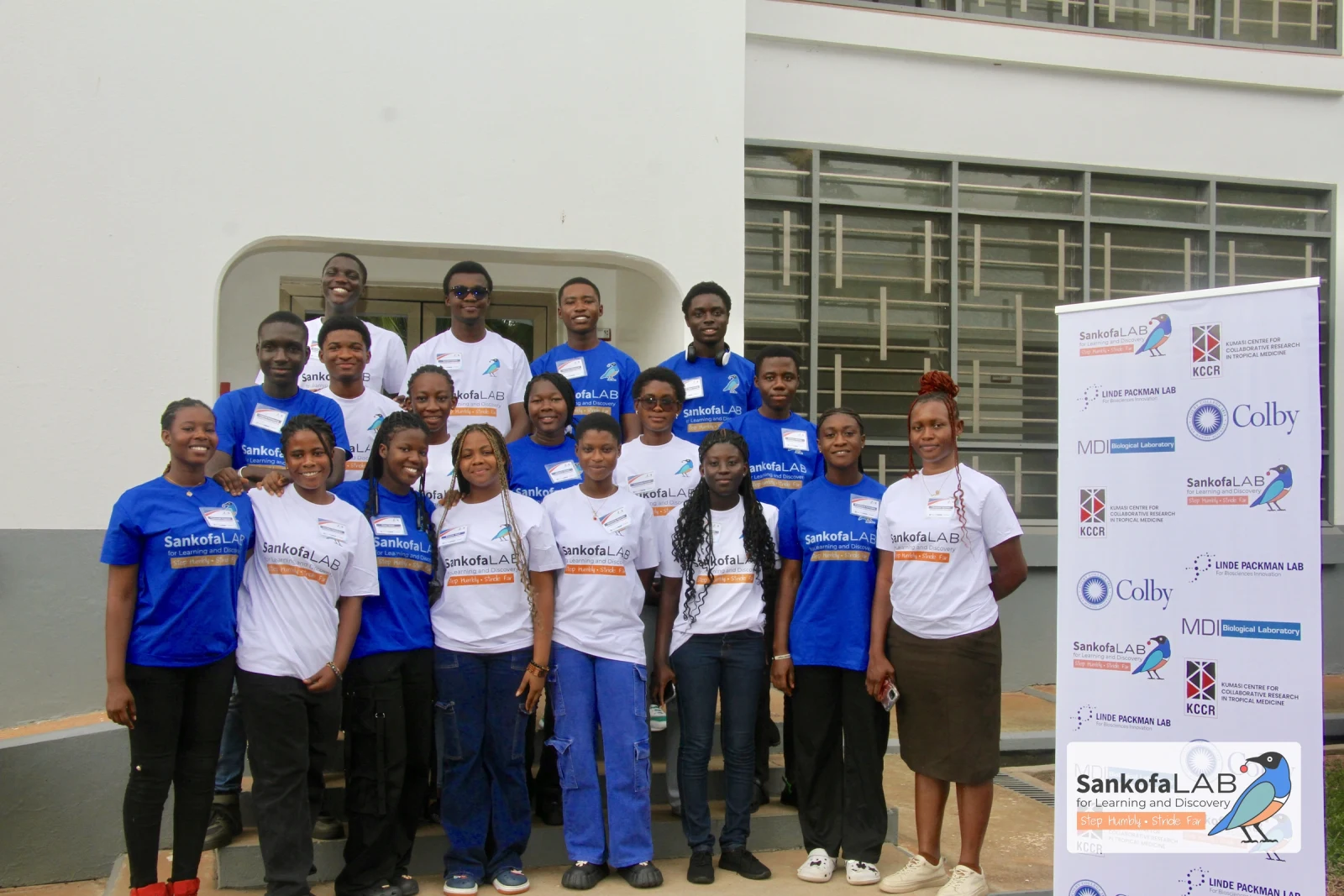
The Sankofa Lab for Learning and Discovery held its inaugural in-person STEM Fellowship at the Kumasi Center for Collaborative Research in Tropical Medicine (KCCR) from August 4 to August 14. The fellowship was made possible with funding support from Colby College’s Linde Packman Lab for Biosciences Innovation, which allowed all participants to take part at no cost.
For two weeks, seventeen recent high school graduates from Ejisuman Senior High School and KNUST Senior High School spent eight hours a day at the research institute. These fellows were selected through an essay-based application process assessing their interest in STEM and prior access to similar opportunities.
At KCCR, the fellows conducted hands-on research in entomology, bacteriology, and parasitology. The three fields converged on a single, ubiquitous organism: mosquitoes.
Mosquitoes are an important area of research at KCCR. There are more than 3,500 species of the insect, with one of the best-known and most dangerous being the Anopheles mosquito. The Anopheles mosquito carries the malaria parasite Plasmodium, which causes the deadliest disease in human history.
Fellows in the entomology module tested insecticide susceptibility in Anopheles and other mosquitoes by exposing them to various WHO-approved insecticides and recording knockdown and mortality. The students collected mosquito larvae and pupae from within and around the Kwame Nkrumah University of Science and Technology (KNUST) campus, brought them to the lab, and reared them to the adult stage. Each fellow had their assigned larval bowl, which they had to feed and keep clean. They learned how to differentiate among the three major mosquito genera common in Ghana (Anopheles, Aedes, and Culex), how to distinguish male and female mosquitoes, how to bloodfeed adult mosquitoes, and how to conduct insecticide susceptibility tests using WHO tube bioassay kits.
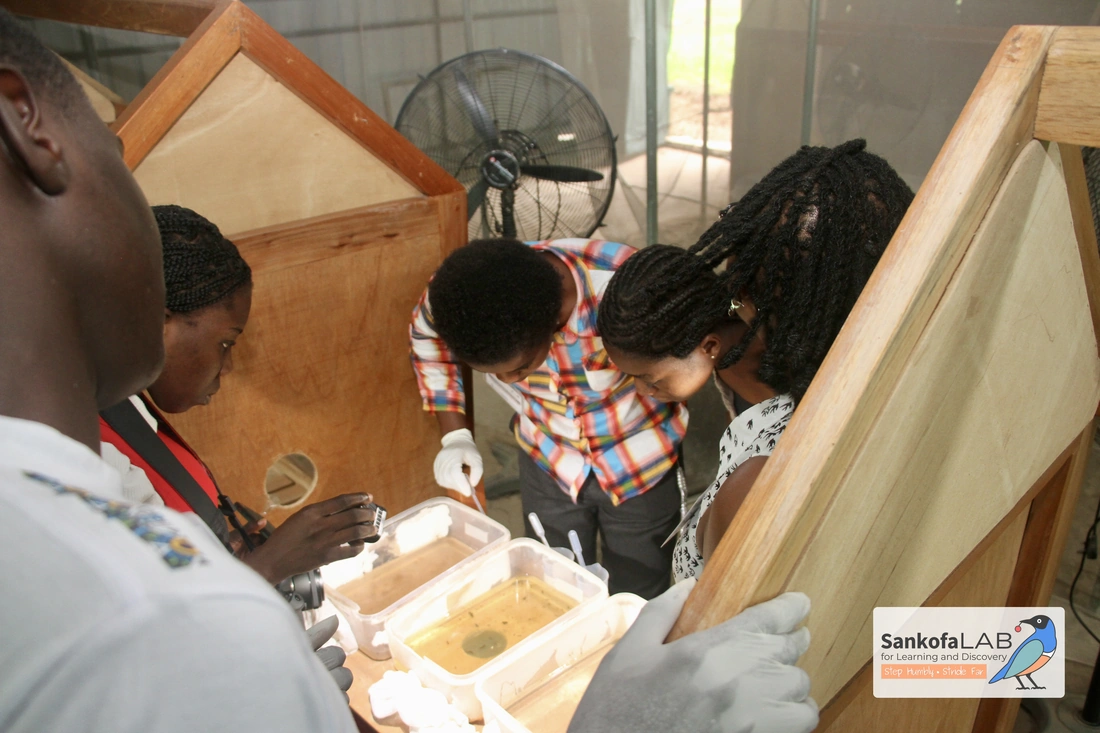
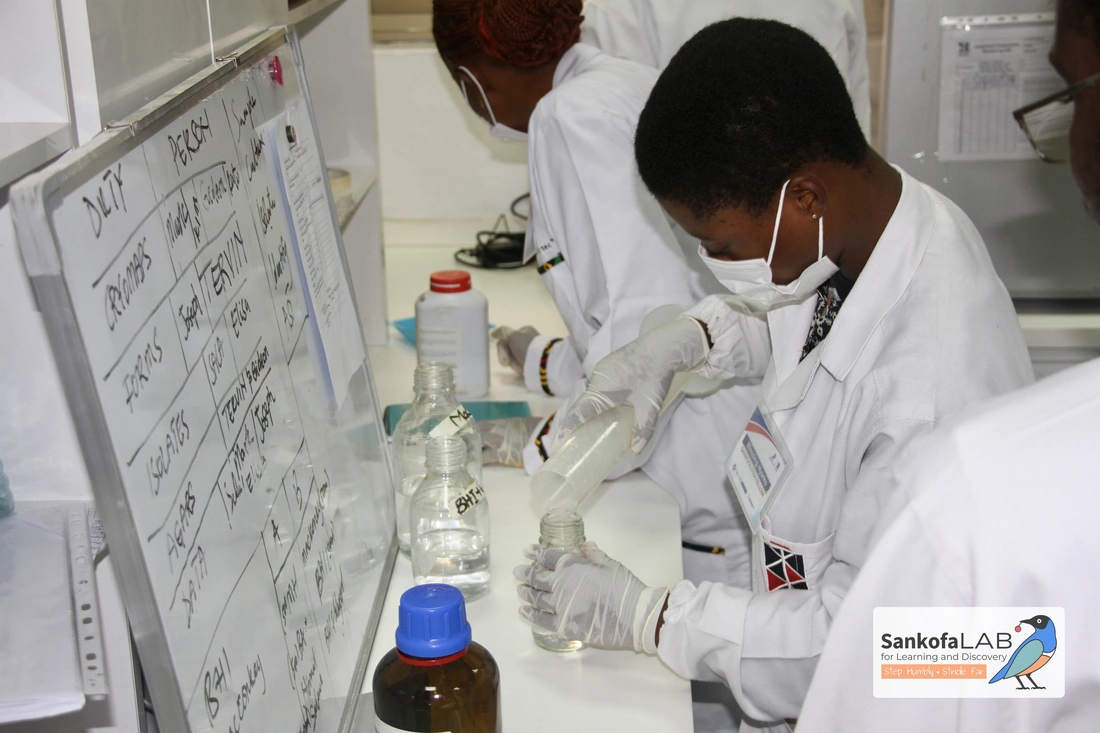
In the bacteriology module, fellows collected the guts of adult mosquitoes from the entomology module and enriched and cultured the gut contents on different agar media. The unassuming mosquito has a diverse community of bacteria in its gut, which may help it accommodate the different parasites it is known to transmit.
The bacteriology module sought to leverage this microbial diversity in the fight against mosquitoes and malaria. The fellows tested cultured bacteria against different antibiotics to develop susceptibility and resistance profiles, generating information that could potentially inform the development of novel mosquito-control strategies and insecticides. Students learned media preparation, aseptic techniques, bacterial culturing and isolation, bacterial identification using biochemical tests and microscopy, and antimicrobial susceptibility testing (AST) and interpretation of AST results.
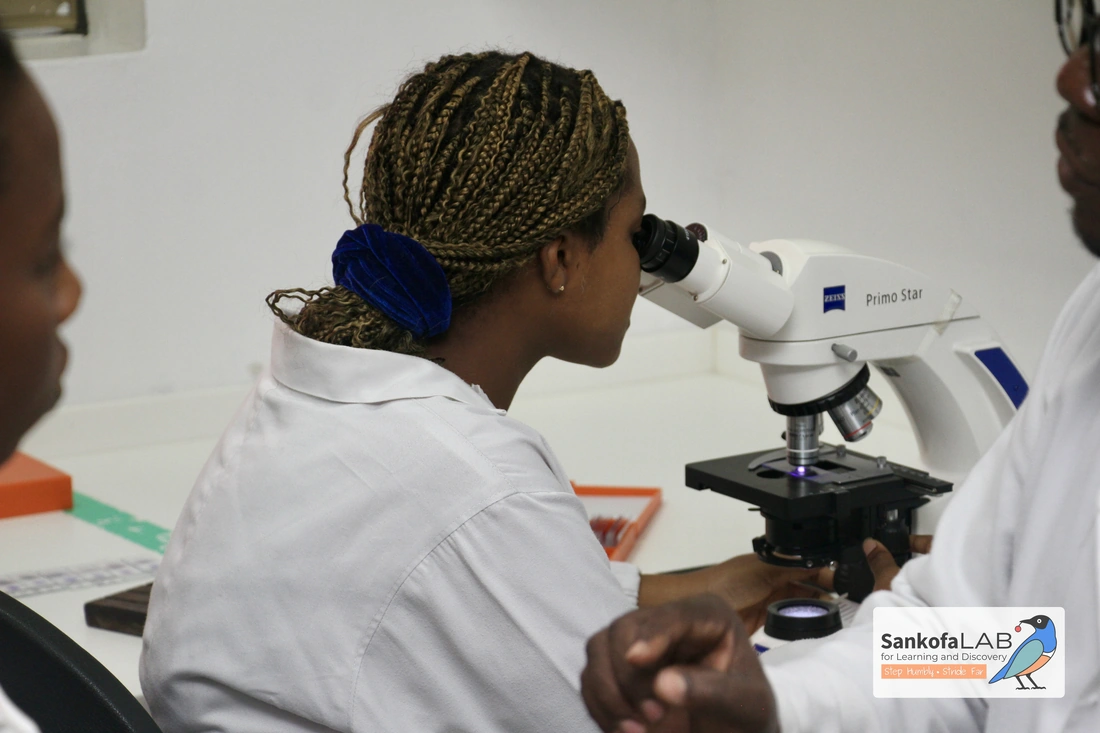
Fellows in the parasitology module focused on the malaria parasite itself, exploring techniques to detect its presence in humans. Malaria can be easily detected when a patient shows symptoms such as fever and general weakness. This is the traditional control strategy. But what if the patient does not show any symptoms? Eliminating malaria requires interrupting the parasite’s transmission, not merely reducing symptomatic cases.
To explore alternative ways of malaria detection, the parasitology module visited a nearby public space, collected capillary blood samples from informed volunteers, and determined whether individuals harbored Plasmodium parasites and could act as a reservoir for transmission. Fellows learned participant recruitment, blood film preparation, Giemsa staining and microscopy, and malaria parasite detection using RDTs.
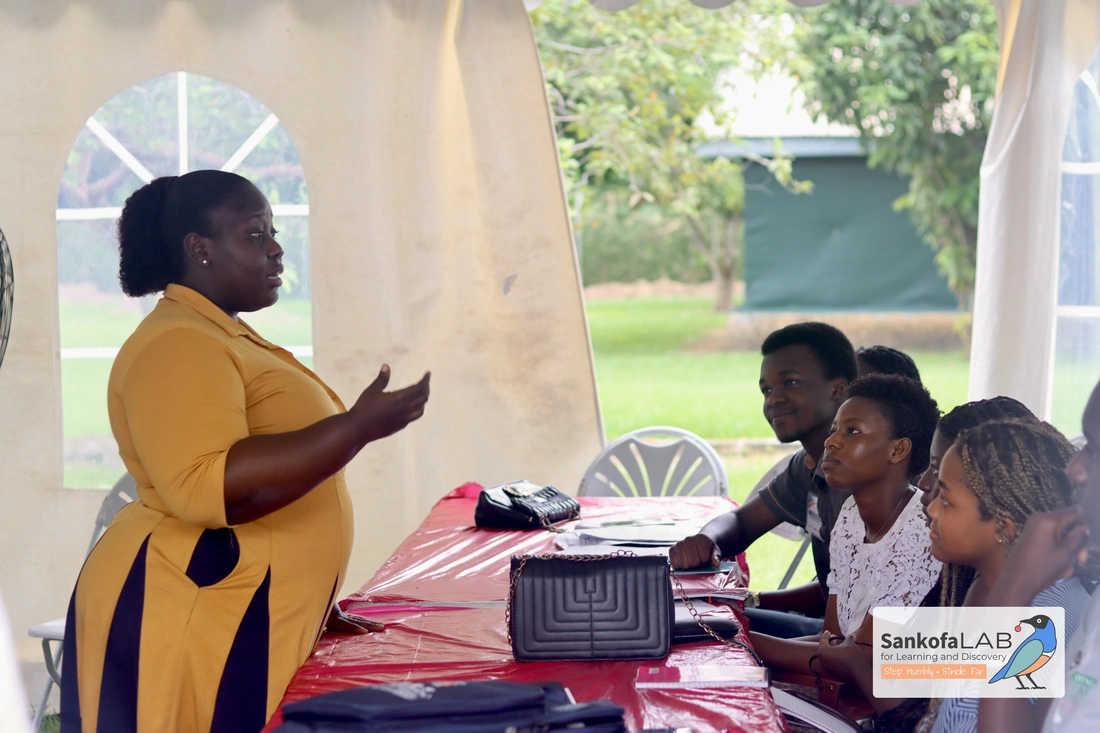
Outside the lab and field, each day began and ended with tent sessions on subjects like science communication and statistics. The sessions also featured individual or panel discussions with STEM students and professionals from various fields to give the fellows a glimpse into what life as a STEM student or professional is like.
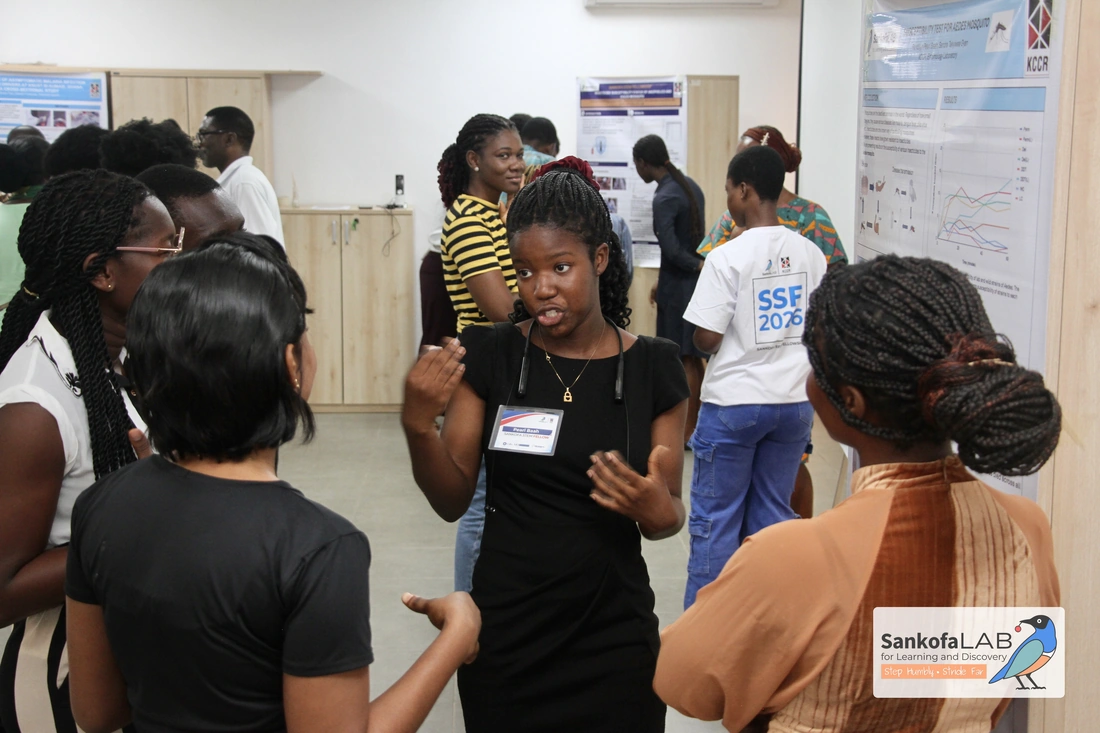
The fellowship ended with a symposium, where fellows presented their self-designed posters summarizing their work from the past two weeks. Sharply dressed and proudly poised, each fellow presented their poster to the KCCR community, which included principal investigators, lab technicians, post-doctoral fellows, graduate students, undergraduate interns, national service personnel, and janitors. They all streamed into the seminar room and were very impressed by the fellows’ achievements.
This collaboration between Sankofa Lab and KCCR is timely for the fellows. They have just graduated from high school and will soon decide what they would like to study at university. We have already heard promising comments from the fellows about deciding to study at KNUST, the university with which KCCR is affiliated, so they can continue exploring the biomedical research opportunities available at KCCR. We believe the fellowship has opened a whole new world to the students.
What’s next for the fellows? Sankofa Lab is committed to helping them navigate their academic and career journeys in STEM. We will stay engaged with them, providing programming and resources to support them at every stage of their journey. We are as excited as they are about what lies ahead.
Sankofa Lab will never contact individuals to request money, personal financial information, or payment via phone, email, or social media. If you receive such a request claiming to be from Sankofa Lab, please disregard it and contact us directly to verify.